From recording to institutional practice.
Artificial Intelligence in Public Procurement: Detecting Procurement Anomalies, Enhancing Tender Evaluation and Managing Contract Risks
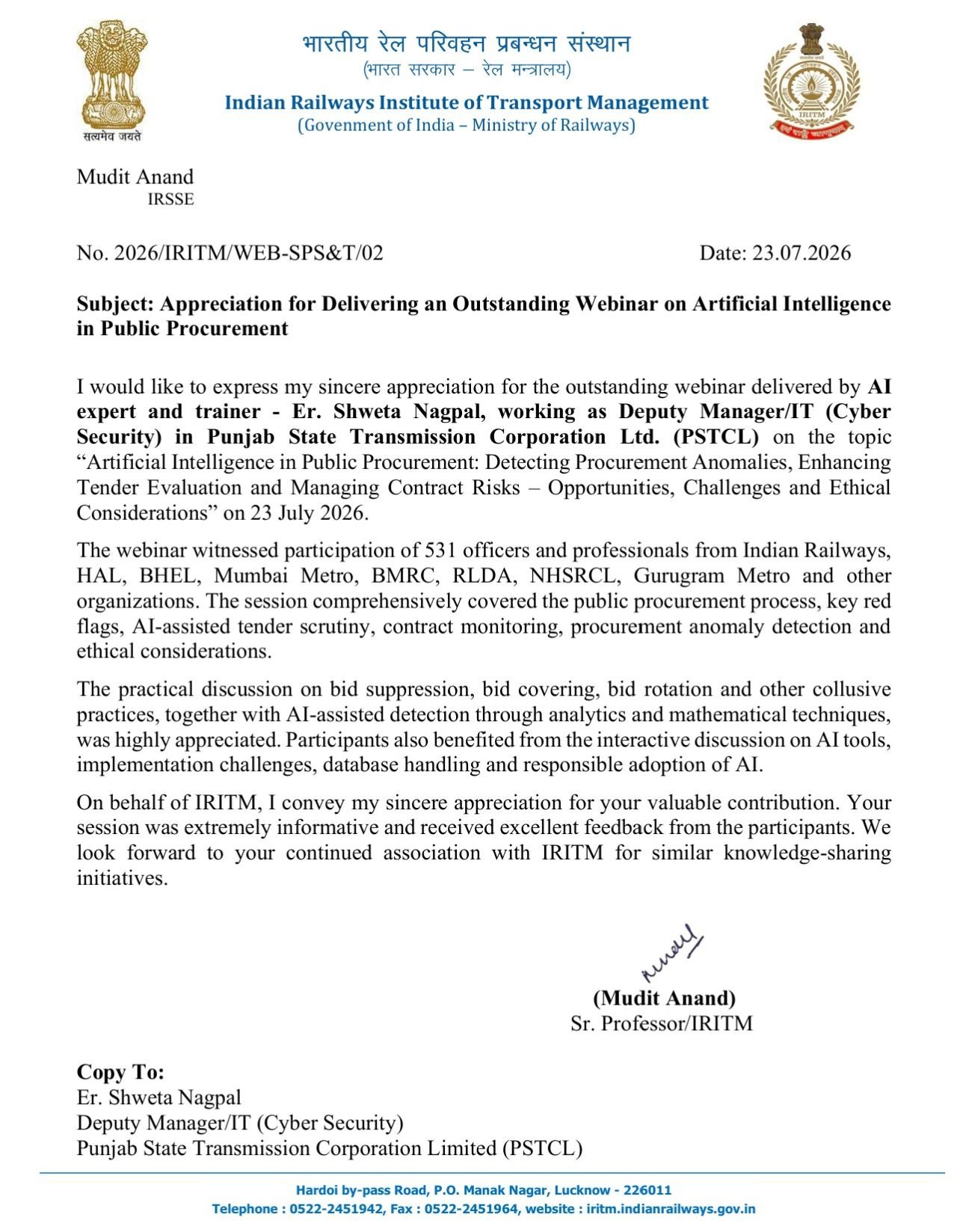
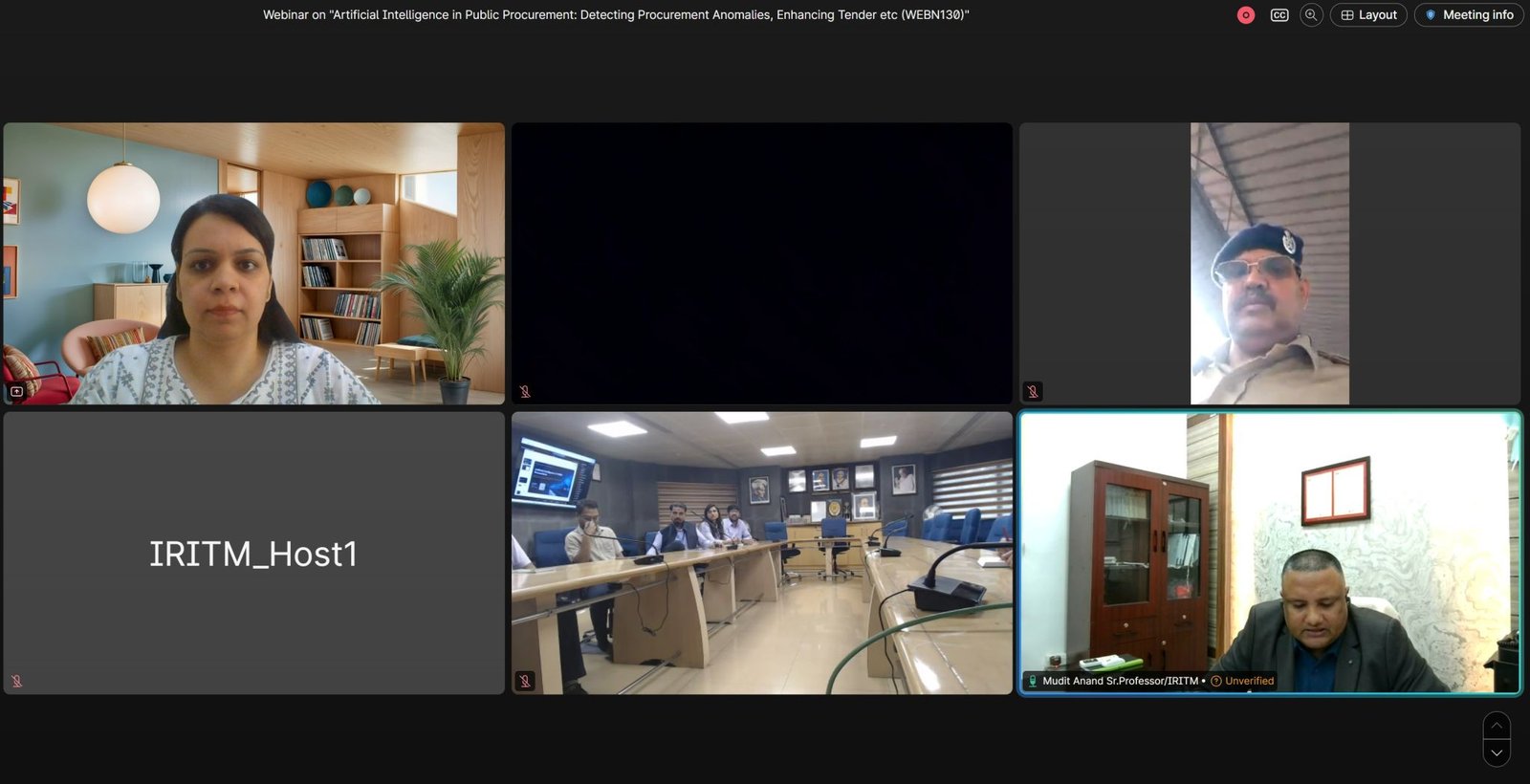
I had the privilege of delivering a webinar for the Indian Railways Institute of Transport Management (IRITM), Lucknow, focused on the practical application of Artificial Intelligence in public procurement.
The session brought together 531 officers and professionals from Indian Railways, Hindustan Aeronautics Limited, Bharat Heavy Electricals Limited, Mumbai Metro Rail Project, Bangalore Metro Rail Corporation Limited, Rail Land Development Authority, National High Speed Rail Corporation Limited, Gurugram Metro Rail Limited and other organisations.
Rather than approaching AI purely from a technology perspective, the session focused on a more fundamental question:
Where can AI actually help a public-sector officer do their job better?
The discussion examined potential applications of AI across the procurement lifecycle, including:
- Pre-tender scrutiny and document analysis
- Tender evaluation and comparative analysis
- Detection of procurement anomalies and unusual patterns
- Identification of potential collusive practices
- Contract monitoring and risk identification
- Post-award contract risk management
- Analysis of large procurement datasets
- AI-assisted decision support and workflow optimisation
A key theme throughout the session was that AI should support decision-making, not replace accountable human judgment.
An AI-generated alert is not evidence of wrongdoing. It is a signal that may warrant further investigation. The responsible officer still needs to examine the underlying facts, understand the context, apply the applicable rules and make the final decision.
This distinction becomes particularly important in public procurement, where transparency, fairness, auditability and accountability are critical.
The session also explored the broader dimensions of Responsible AI, including explainability, audit trails, data quality, bias, accountability, limitations of AI systems, prompt design, customisation and the challenges of integrating AI into existing organisational systems.
The discussion ultimately moved beyond:
“What can AI do?”
to the more important question:
“How can we actually use AI in our organisation?”
I am grateful to IRITM, Lucknow, Ministry of Railways, Government of India, and Shri Mudit Anand, IRSSE, for providing the platform to engage with such a diverse and knowledgeable audience.
The session was also recognised through a formal Appreciation Letter from IRITM, acknowledging the webinar as an outstanding contribution and specifically appreciating its practical coverage of procurement anomaly detection, collusive practices, analytics, implementation challenges and responsible AI adoption.
This experience reinforced one of my strongest beliefs about AI learning:
AI sessions should not be one-size-fits-all.
Whether the audience consists of senior leadership, government officers, public-sector professionals, procurement teams, technical teams or young professionals, AI becomes meaningful when it is connected to the work they actually do.
The most valuable AI session isn't necessarily the one where participants learn the most about AI.
It is the one where they leave knowing what they can do with it tomorrow.